New Leasing Special
Up to 12 Weeks Free off Base Rent on Select Units + 6 months free parking.*
*Min. term & restrictions apply. Other costs & fees excluded. Offer may change.

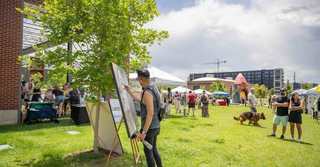
Photo Credit: River North Arts District
RiNo ArtPark is a newly developed public space that spans several acres along the South Platte River in Denver’s River North Art District. Built from repurposed industrial buildings and new riverfront green space, the campus brings together studios, galleries, performance space, and community gathering areas designed for both everyday neighborhood use and larger cultural programming.
Arts, recreation, and community resources share the same walkable setting here.
Visit at: 1900 35th St, Denver, CO 80216
The inviting waterfront space reimagines a former industrial riverfront once lined with warehouses and service yards that limited public access to the South Platte. The redevelopment focused on preserving and repurposing existing structures rather than replacing them, shaping the campus around adaptive reuse and open public space.
A key architectural move transformed one large industrial building into two wings by removing its center to create a public plaza. The plaza now acts as the campus’s main gathering space and gateway, guiding visitors between indoor cultural venues and the surrounding green landscape.
The park also feeds directly into the Arkins Promenade and the South Platte River trail, linking the campus to a broader pedestrian and bike network along the riverfront. Throughout the site, public art incorporates salvaged industrial materials, including metal hoppers repurposed into sculptural installations that reflect the area’s industrial past while reinforcing the project’s reuse-driven design approach.
An entire wing of the ArtPark is dedicated to creative education and artistic production. The Bob Ragland Branch of the Denver Public Library anchors this side of the campus, offering more than traditional library services. The branch includes collaborative learning areas, flexible meeting rooms, and maker-style spaces designed to support workshops, community programs, and creative exploration.
Surrounding the library are affordable artist studios and gallery spaces operated in partnership with RedLine Contemporary Art Center. These studios provide working space for artists at different career stages while allowing the public to engage directly with the creative process through exhibitions, programming, summer art markets, and more.
Outdoor areas function as both a cultural stage and neighborhood green space. The central plaza hosts performances, seasonal programming, and community events while remaining open and flexible for casual use. Surrounding lawn areas and landscaped seating zones create places to gather, relax, or transition directly onto the South Platte River trail and Arkins Promenade.
Playful public art is woven throughout the outdoor spaces, adding color and character to the campus. Sculptural installations made from salvaged industrial hoppers reference the site’s past while doubling as visual landmarks and informal gathering points. Bright murals, bold metalwork, and interactive art elements add whimsical warmth and ambiance.
A major centerpiece of the campus is Truss House, a flexible performing arts and event venue designed to support a wide range of programming. The roughly 4,000-square-foot facility accommodates about 200 seated guests or up to 450 attendees for standing events across its main floor and mezzanine level.
Truss House fills a gap in Denver’s cultural infrastructure by providing accessible performance space for smaller arts organizations and emerging performers. The venue regularly hosts theater productions, live music, exhibitions, festivals, private events, and community gatherings.
RiNo ArtPark represents a broader shift in how cities think about cultural space. Instead of isolating art venues from daily life, the campus integrates creative programming into public infrastructure.
The project also demonstrates how adaptive reuse can preserve neighborhood character while supporting contemporary community needs. By transforming industrial buildings into flexible cultural assets, the space reinforces the identity of the RiNo district while expanding access to creative opportunities. It's truly a wonderful feature of living here!